
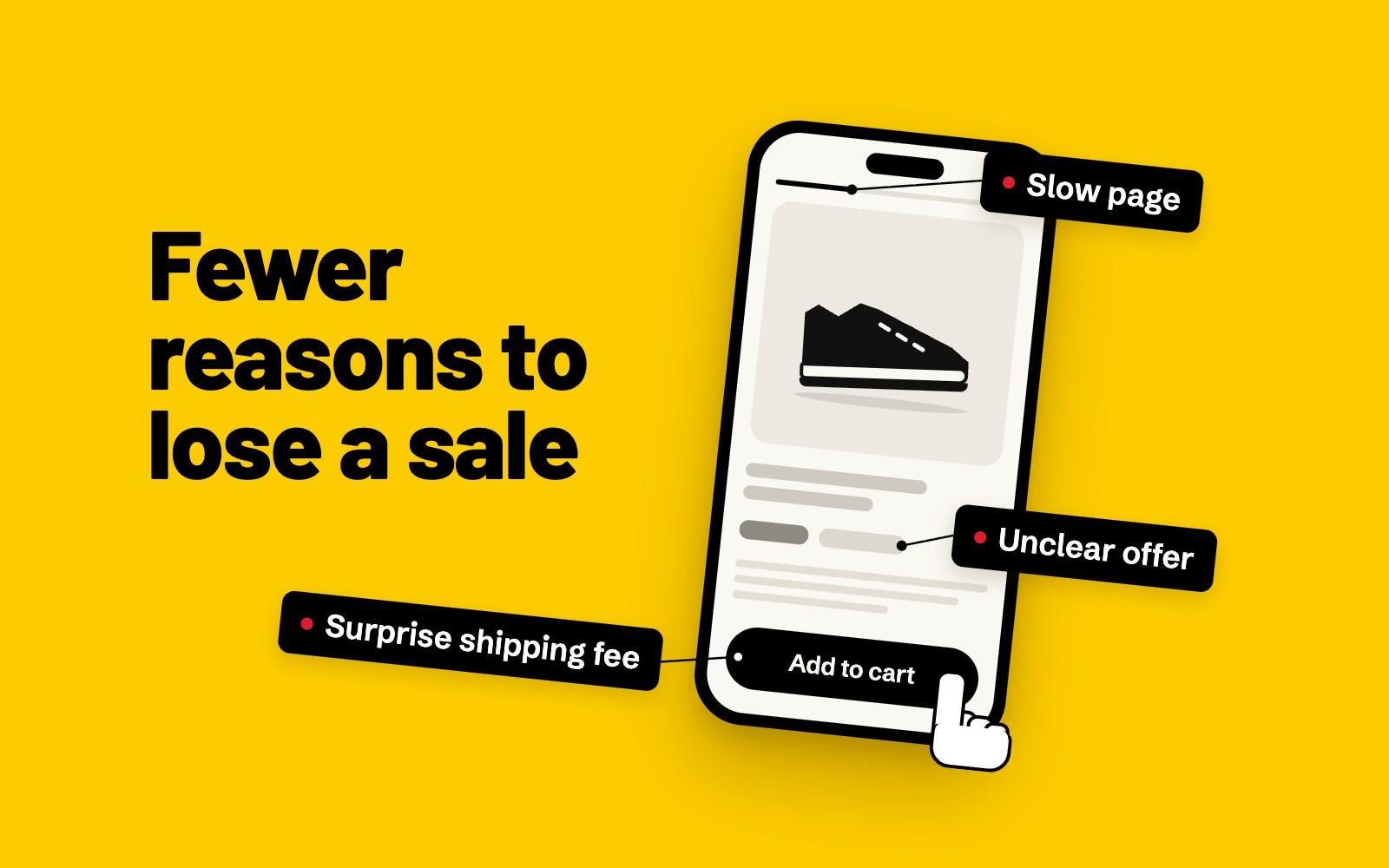
More visitors do not automatically mean more revenue. If a shopper cannot understand an offer, trust a product page, or complete checkout comfortably on a phone, a bigger advertising budget can simply send more people into the same broken experience.
That is why conversion rate optimisation (CRO) should be part of every Shopify growth plan, and why it becomes especially important ahead of Black Friday Cyber Monday (BFCM). The goal is not to redesign everything. It is to identify the friction that matters, fix it in the right order, and measure whether the changes help customers buy.
What is CRO, and why does it matter for Shopify?
CRO is the process of improving the proportion of store visitors who complete a desired action, usually a purchase. It combines customer research, analytics, user experience, copy, performance, and controlled experimentation. A good CRO programme asks what is preventing shoppers from buying before recommending a new feature or design.
Consider a store with 50,000 monthly sessions, a 2% purchase conversion rate, and an average order value of $60. That is approximately 1,000 orders and $60,000 in revenue. At 2.4% conversion, with sessions and order value unchanged, the same store would generate approximately 1,200 orders and $72,000. This is an illustration, not a guaranteed result; actual performance depends on traffic quality, product demand, margins, and measurement.
The Shopify CRO audit: where revenue leaks usually hide
An effective audit follows the customer journey instead of judging pages only by appearance. Start with the pages receiving meaningful traffic and the steps where shoppers drop out.
1. Homepage and navigation: can visitors find the right product?
Within a few seconds, a visitor should understand what the brand sells, who it is for, and where to go next. Check whether the hero message is specific, mobile navigation is easy to use, collection names make sense, and promotional claims match the products shown. Avoid competing banners and unnecessary pop-ups that obscure the first action.
2. Collection pages: are shoppers able to compare?
Audit filters, sorting, product imagery, pricing, stock status, and card-level information. A collection should make the next choice easier. If customers must open six products to learn which one suits them, the collection page is not doing enough work.
3. Product pages: does the page answer purchase questions?
Review the product title, images, variants, price, delivery information, returns policy, reviews, and add-to-cart experience. On mobile, check whether the primary purchase action is easy to find and use. A sticky add-to-cart can help in some contexts, but test it against the existing design rather than treating it as a universal solution.
4. Cart and checkout: what surprises the customer?
Look for late shipping charges, confusing discount behaviour, unavailable payment methods, and unclear delivery expectations. Test a real checkout journey on a mobile device. Verify the full experience, including discount combinations, confirmation messages, and payment failures.
5. Speed, apps, and tracking: what is happening underneath?
Measure key templates on real mobile connections, review Core Web Vitals, and inspect unnecessary third-party scripts. Confirm analytics events and purchases are recorded accurately before making optimisation decisions. Not every Shopify app slows a store, but unused or poorly implemented scripts deserve scrutiny.
How to prioritise CRO fixes without wasting development time
Rank findings by business impact, evidence, effort, and risk. Start with high-traffic templates and severe issues such as broken variants or payment failures. Then tackle clarity and usability improvements. For larger design changes, use A/B tests when traffic and data quality make a meaningful experiment possible; otherwise document the hypothesis and monitor results carefully.
For merchants who want a starting point, FixMyStore provides a Shopify store auditing experience focused on finding opportunities across the shopping journey.
Explore FixMyStore's Shopify store audit →
BFCM 2026: prepare the buying experience before increasing ad spend
Black Friday 2026 falls on November 27, followed by Cyber Monday on November 30. The strongest BFCM plan combines a clear offer with a store that can actually convert the additional demand. Merchants should decide which changes are safe to deploy, test promotions end to end, and leave enough time for a final quality-assurance window.
Before the sale: audit the offer and the funnel
Choose promotions based on contribution margin rather than headline discount size. Review best-selling product pages, test mobile navigation, and make delivery cutoffs easy to understand. Check inventory, tracking, email capture, and customer support workflows. Set a sensible code freeze for major theme changes before the peak period.
During the sale: remove uncertainty, not just prices
Use clear sale prices, eligibility rules, authentic end dates, and consistent messages from advertisements to product pages. Test bundles, free-shipping thresholds, and discount combinations against actual checkout behaviour. Keep an eye on errors, inventory mismatches, and unexpected conversion drops by device and traffic source.
After the sale: turn seasonal lessons into ongoing CRO
Review conversion rate alongside average order value, revenue per session, gross margin, refunds, and customer acquisition cost. Segment new versus returning customers and mobile versus desktop. Capture what failed and what worked so next season begins with evidence, not guesses.
Where Shopify apps fit into a conversion strategy
Apps are useful when they solve a real operational or customer problem. But an app should not be the first answer to every conversion issue. Start with native Shopify capabilities, identify the missing function, then evaluate app compatibility, support, performance, cost, and ongoing maintenance.
Final Apps develops Shopify solutions for merchant workflows. Its app portfolio can be explored through the official Shopify App Store developer listings. Merchants should review each app's current features and compatibility before installing.
View the Final Apps Shopify App Store listing →
View the AB Final Shopify App Store listing →
Audit first, implement second: a practical growth workflow
A useful workflow has three stages: diagnose the problem, implement the highest-priority fix, and validate the outcome. An automated audit can surface possible issues quickly, but a full CRO strategy also needs customer context, analytics interpretation, and implementation judgment.
FixMyStore is designed as a starting point for merchants who want to inspect their storefront and identify opportunities. It is available on the web and through its Shopify App Store listing. ConversionAB focuses on the implementation side, including Shopify development and conversion-focused store improvements.
See FixMyStore on the Shopify App Store →
Learn about ConversionAB's Shopify CRO services →
A 15-minute CRO self-check for your next sale
- Open your top-selling product page on a phone and try to buy it.
- Ask someone unfamiliar with the brand to explain your main offer after five seconds.
- Check whether price, delivery, returns, and reviews are easy to locate.
- Apply your planned BFCM discounts in a test checkout.
- Check whether analytics capture a completed test purchase correctly.
- Write down the three most serious friction points and assign owners and deadlines.
The objective is not to chase a perfect score. It is to find the next meaningful improvement for the customer and the business.
Frequently asked questions
What is a Shopify CRO audit?
A structured review of the customer journey, including navigation, collections, product pages, cart, checkout, performance, and measurement, to identify friction and prioritise improvements.
When should a Shopify store start preparing for BFCM?
Ideally weeks before the event, with major changes completed early enough to allow testing. Even close to the sale, checking broken journeys, offer clarity, and checkout reliability can be valuable.
Do Shopify apps automatically improve conversion rates?
No. An app helps only when its function addresses a genuine merchant or shopper need. Evaluate performance, maintenance, and the effect on the buying journey.
Is CRO only for high-traffic stores?
No. Smaller stores can improve usability and reduce friction, although reliable A/B testing usually requires sufficient traffic and conversions.
Final takeaway: fix the experience before buying more traffic
BFCM makes every weakness in the shopping journey more expensive, but CRO is not a seasonal task. Build a repeatable habit: audit, prioritise, improve, and measure. When customers can find products, understand value, and buy without surprises, marketing has a stronger foundation.
About the contributors: Felix Josemon is the founder of FixMyStore. ConversionAB is a Shopify development and CRO agency. Final Apps is its parent company and develops Shopify apps. FixMyStore is a Shopify store auditing tool within this ecosystem.