Your Domain Could Get Reclassified as Premium - And There's Nothing You Can Do About It

Your Domain Could Get Reclassified as Premium - And There's Nothing You Can Do About It

The eCom Mafia

The eCom Mafia

Discussions

Discussions

A warning from The eCom Mafia community that every online business owner needs to hear.

The 15,000 USD Renewal Notice

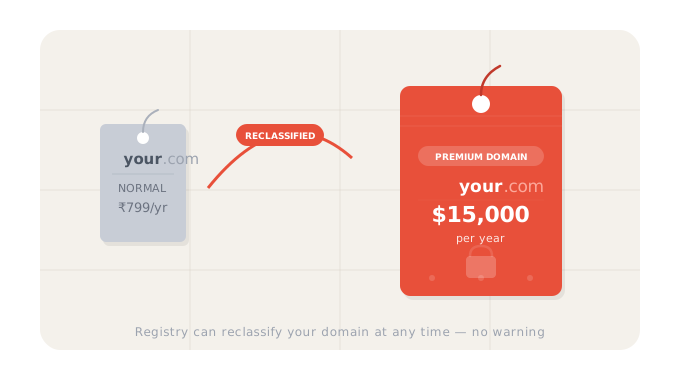
Shyjal Raazi, founder of Micro.company, recently shared a post on LinkedIn that stopped a lot of people mid-scroll: his domain had been reclassified as "premium" by the registry - and the renewal quote came in at $15,000 USD.

When he brought this to The eCom Mafia group, the responses came fast. Several members had faced similar situations. One had experienced a nearly 800x price jump on a domain they'd originally registered for ₹799 plus tax, which was now showing a renewal price of over ₹6,47,000.

That's not a billing error. That's a reclassification.

Wait - Can Registries Actually Do This?

Yes, and this is the part that caught most people off guard.

Shyjal explained it clearly in the group: the registry and the registrar are two different things. The registry controls the entire domain extension - .com, .store, .in, whatever TLD you're on. GoDaddy and Namecheap? They're just registrars. Middlemen. If the registry decides your domain is premium, that classification follows your domain everywhere. Switching from GoDaddy to Namecheap won't save you. The price is locked at the registry level.

The 800x story had a slightly different trigger - the domain owner had missed the auto-renewal window by 30 days, after which GoDaddy contacted him and informed him they were converting it to a premium domain. He let it go. But Shyjal's situation was different: his domain still had months left before expiry. No lapse, no missed payment - just a reclassification on an active, fully paid domain.

💡 Key Insight: A registry can reclassify your domain as "premium" at any time - even while it's active and fully paid. Switching registrars won't help. The new pricing applies everywhere.

Why Is This Happening More Now?

The group had a few theories, and they make sense.

One member pointed out that domains are increasingly scarce - especially short, brandable ones. With vibe coding tools lowering the barrier to launching new products, demand for clean domain names is going up. Registries know this and are pricing accordingly.

Another angle: short, pronounceable, tech-sounding domains have genuine market value. One member confirmed it - "Yes, it is a short, brandable domain. It deserved to be premium." The catch is that when the domain was purchased, it was showing normal renewal fees. The reclassification happened quietly, just one month before expiry.

Haris, another member, had a similar experience - ended up paying around $700 instead of the usual $30 for renewal. By the time bidding costs and other charges were factored in, the total came to nearly $1,200 for a few years.

What You Can Do Right Now

Shyjal shared what he took away from this, and it's straightforward:

Extend your domain to maximum expiry - especially if it's central to your business.

Most registrars let you lock in renewal for up to 10 years. If you're paying ₹1,000/year today, paying ₹10,000 now to cover the next decade is a no-brainer compared to a reclassification notice at renewal time.

There's also an SEO angle here. Google treats domains with longer expiry as a mild trust signal. It's not a major ranking factor, but combined with everything else, it doesn't hurt.

Practical steps to protect yourself:

  • Check the expiry date on every domain you own today

  • Extend any business-critical domain to the maximum years available (usually 10)

  • Set auto-renewal and calendar reminders - don't rely on one system

  • Keep a backup domain ready if your product is still early-stage

  • If you're on a new or uncommon TLD, be especially watchful - reclassification is more common outside legacy extensions like .com and .net

What If It's Already Been Reclassified?

Unfortunately, there's no clean workaround. Once the registry marks a domain as premium, you'll pay the premium price regardless of which registrar you use. Switching providers won't unlock a cheaper rate.

If the domain is critical to your brand, the math is simple: weigh the cost of keeping it against the cost and disruption of rebranding. If you have a backup domain or the product is still young, walking away might be the smarter call. Shyjal noted he had a backup domain ready for the product in question, which gave him the option to walk away without a crisis.

If you're still in the early stages and can afford flexibility, this is also a reminder to not get too attached to a domain before validating your product. Pick something functional, extend it for a few years, and revisit the branding question once you have traction.

The Bottom Line

Domain pricing isn't as stable as most people assume. Registries can and do reclassify domains based on perceived brand value, market demand, or just because they can. And when that happens, your registrar has no power to intervene.

The simplest insurance? Renew early, renew long. If a domain matters to your business, treat that annual ₹1,000 renewal like the cheapest insurance you're paying.

This post is supported by FixMyStore.com - experts in optimizing Shopify stores for speed, conversion, and performance.

A warning from The eCom Mafia community that every online business owner needs to hear.

The 15,000 USD Renewal Notice

Shyjal Raazi, founder of Micro.company, recently shared a post on LinkedIn that stopped a lot of people mid-scroll: his domain had been reclassified as "premium" by the registry - and the renewal quote came in at $15,000 USD.

When he brought this to The eCom Mafia group, the responses came fast. Several members had faced similar situations. One had experienced a nearly 800x price jump on a domain they'd originally registered for ₹799 plus tax, which was now showing a renewal price of over ₹6,47,000.

That's not a billing error. That's a reclassification.

Wait - Can Registries Actually Do This?

Yes, and this is the part that caught most people off guard.

Shyjal explained it clearly in the group: the registry and the registrar are two different things. The registry controls the entire domain extension - .com, .store, .in, whatever TLD you're on. GoDaddy and Namecheap? They're just registrars. Middlemen. If the registry decides your domain is premium, that classification follows your domain everywhere. Switching from GoDaddy to Namecheap won't save you. The price is locked at the registry level.

The 800x story had a slightly different trigger - the domain owner had missed the auto-renewal window by 30 days, after which GoDaddy contacted him and informed him they were converting it to a premium domain. He let it go. But Shyjal's situation was different: his domain still had months left before expiry. No lapse, no missed payment - just a reclassification on an active, fully paid domain.

💡 Key Insight: A registry can reclassify your domain as "premium" at any time - even while it's active and fully paid. Switching registrars won't help. The new pricing applies everywhere.

Why Is This Happening More Now?

The group had a few theories, and they make sense.

One member pointed out that domains are increasingly scarce - especially short, brandable ones. With vibe coding tools lowering the barrier to launching new products, demand for clean domain names is going up. Registries know this and are pricing accordingly.

Another angle: short, pronounceable, tech-sounding domains have genuine market value. One member confirmed it - "Yes, it is a short, brandable domain. It deserved to be premium." The catch is that when the domain was purchased, it was showing normal renewal fees. The reclassification happened quietly, just one month before expiry.

Haris, another member, had a similar experience - ended up paying around $700 instead of the usual $30 for renewal. By the time bidding costs and other charges were factored in, the total came to nearly $1,200 for a few years.

What You Can Do Right Now

Shyjal shared what he took away from this, and it's straightforward:

Extend your domain to maximum expiry - especially if it's central to your business.

Most registrars let you lock in renewal for up to 10 years. If you're paying ₹1,000/year today, paying ₹10,000 now to cover the next decade is a no-brainer compared to a reclassification notice at renewal time.

There's also an SEO angle here. Google treats domains with longer expiry as a mild trust signal. It's not a major ranking factor, but combined with everything else, it doesn't hurt.

Practical steps to protect yourself:

  • Check the expiry date on every domain you own today

  • Extend any business-critical domain to the maximum years available (usually 10)

  • Set auto-renewal and calendar reminders - don't rely on one system

  • Keep a backup domain ready if your product is still early-stage

  • If you're on a new or uncommon TLD, be especially watchful - reclassification is more common outside legacy extensions like .com and .net

What If It's Already Been Reclassified?

Unfortunately, there's no clean workaround. Once the registry marks a domain as premium, you'll pay the premium price regardless of which registrar you use. Switching providers won't unlock a cheaper rate.

If the domain is critical to your brand, the math is simple: weigh the cost of keeping it against the cost and disruption of rebranding. If you have a backup domain or the product is still young, walking away might be the smarter call. Shyjal noted he had a backup domain ready for the product in question, which gave him the option to walk away without a crisis.

If you're still in the early stages and can afford flexibility, this is also a reminder to not get too attached to a domain before validating your product. Pick something functional, extend it for a few years, and revisit the branding question once you have traction.

The Bottom Line

Domain pricing isn't as stable as most people assume. Registries can and do reclassify domains based on perceived brand value, market demand, or just because they can. And when that happens, your registrar has no power to intervene.

The simplest insurance? Renew early, renew long. If a domain matters to your business, treat that annual ₹1,000 renewal like the cheapest insurance you're paying.

This post is supported by FixMyStore.com - experts in optimizing Shopify stores for speed, conversion, and performance.

2025 @ The eCom Show is a brand of Golden Percentages LLP.

2025 @ The eCom Show is a brand of Golden Percentages LLP.

2025 @ The eCom Show is a brand of Golden Percentages LLP.