
Influencers vs Performance Ads: What Should Brands Invest in First?
Influencers vs Performance Ads: What Should Brands Invest in First?

The eCom Mafia
The eCom Mafia
Discussions
Discussions
•
In today’s cluttered digital landscape, brands - especially D2C and online-first businesses - struggle with a fundamental question:
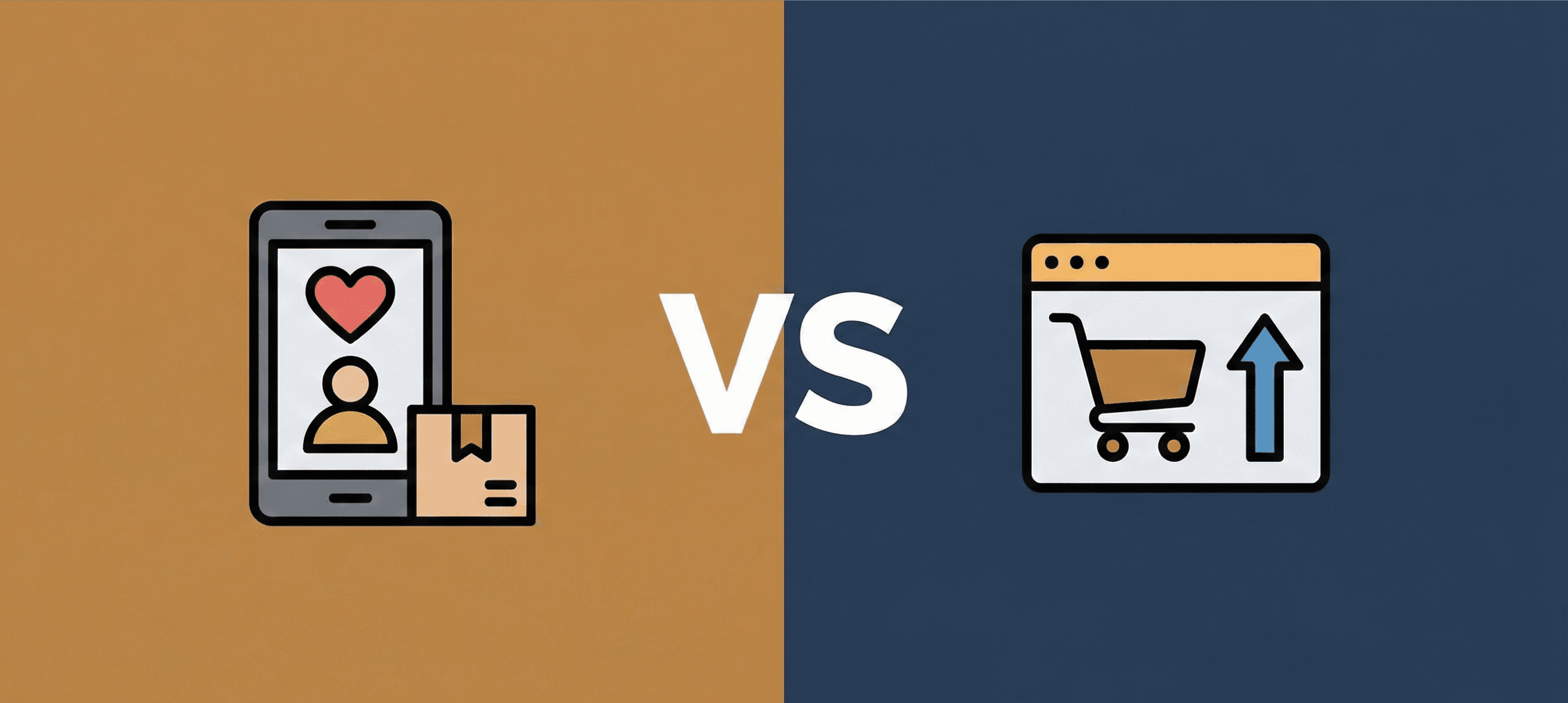
Should you invest in influencers first or performance ads first?
This conversation took off when we posed this very question, sparking thoughtful responses from marketers, founders, and ecommerce operators. The discussion began with Manzoor from Impulze.ai, who quickly shared a compelling perspective from Dale W. Harrison on the effectiveness of performance marketing.
What followed was one of the most structured, insightful debates on modern brand-building.
Why Performance Marketing “Works”… But Not Forever
Manzoor Samad, co-founder of Impulze.ai shared Dale W. Harrison’s article, “The Unreasonable Effectiveness of Performance Marketing” (full article), which challenges a long-standing belief:
If brand building is so vital, why do thousands of FMCG brands survive profitably without ever running a brand campaign?
The reality, as Harrison explains:
Many FMCG brands never run brand ads, yet remain profitable.
But they rarely cross 5–10% market share, and they suffer from low pricing power.
In other words:
Performance marketing can sustain growth - but only brand building can scale it.
Across B2B studies (Gartner, BCG, 6Sense), the data is even clearer:
80-85% of buyers already know which brands they consider.
90% of final choices come from that initial consideration set.
Meaning:
Brands relying solely on performance marketing are fighting for only 20–25% of the market, and winning just a fraction of that.
Personal Branding: The New Organic Powerhouse
Neeve Jose, a community member, highlighted how creators like @and_abhinav on Instagram are proving the power of personal branding. A single creator documenting his BTech journey is now building an audience and teaching ecommerce fundamentals.
This reinforces a modern truth:
People trust people. Personal brands accelerate organic reach.
So, What Should Brands Invest in First?
After I asked the central question, perspectives from the group followed, each reflecting real operator experience.
1. “It depends on your objectives.” - A Long-Term Organic View
Some argued that for brands thinking long-term, organic channels - community, content, personal branding - should take priority.
But the next question clarified the debate…
2. “Is it for a new brand or an existing one?”
For a newly launched brand, awareness is low and budgets are tight.
For an existing brand, cash flow exists, and marketing becomes a scaling lever.
This distinction changes the recommended path entirely.
3. “Influencers build the upper funnel; performance ads convert.”
Vineeth Ayyappan, founder of Backbone Consultancy, captured the fundamentals:
Influencer marketing = awareness
Performance marketing = conversions
So the strategy should shift by brand stage:
New brands:
A mix, with more weight on influencers to create the top of the funnel.
Established brands:
Heavier on performance, since awareness already exists.
Others agreed: new brands shouldn’t choose one channel exclusively - they should blend both.
4. Timing Matters: The Flywheel Approach for Budget-Conscious Brands
Amal Antony, a.k.a. @themalluhustler, offered one of the most practical, ROI-first perspectives - especially for bootstrapped founders.
His strategy:
Step 1 - Start with performance marketing
This helps generate short-term cash flow, targeting bottom-of-funnel customers.
Step 2 - Reinvest profits into influencers
This influencer-generated content helps:
Build long-term brand equity
Reduce future CAC
Improve LTV
Strengthen performance creatives
Step 3 - Repeat → build a flywheel
“It’s not an either/or question; it’s about timing.” - Amal
This incremental reinvestment model helps brands grow sustainably without burning through capital.
So What’s the Final Answer? Influencers First or Performance Ads First?
The consensus from the group can be summarised into a decision-making framework:
If You’re a New Brand With a Limited Budget
Start with performance ads → get cash flow → reinvest into influencers → build brand.
If You’re a New Brand With Decent Budget
Run a balanced mix, giving slight priority to influencer-led awareness.
If You’re an Established Brand
Double down on performance ads, while keeping influencers running to maintain recall and reduce long-term CAC.
The Real Insight: They’re Not Opposites - They’re Sequential
Performance helps you survive today
Influencers help you scale tomorrow
Brand building helps you win the market long-term
Smart brands don’t choose between them - They sequence them into a flywheel.
This post is supported by FixMyStore.com - experts in optimizing Shopify stores for speed, conversion, and performance.
In today’s cluttered digital landscape, brands - especially D2C and online-first businesses - struggle with a fundamental question:
Should you invest in influencers first or performance ads first?
This conversation took off when we posed this very question, sparking thoughtful responses from marketers, founders, and ecommerce operators. The discussion began with Manzoor from Impulze.ai, who quickly shared a compelling perspective from Dale W. Harrison on the effectiveness of performance marketing.
What followed was one of the most structured, insightful debates on modern brand-building.
Why Performance Marketing “Works”… But Not Forever
Manzoor Samad, co-founder of Impulze.ai shared Dale W. Harrison’s article, “The Unreasonable Effectiveness of Performance Marketing” (full article), which challenges a long-standing belief:
If brand building is so vital, why do thousands of FMCG brands survive profitably without ever running a brand campaign?
The reality, as Harrison explains:
Many FMCG brands never run brand ads, yet remain profitable.
But they rarely cross 5–10% market share, and they suffer from low pricing power.
In other words:
Performance marketing can sustain growth - but only brand building can scale it.
Across B2B studies (Gartner, BCG, 6Sense), the data is even clearer:
80-85% of buyers already know which brands they consider.
90% of final choices come from that initial consideration set.
Meaning:
Brands relying solely on performance marketing are fighting for only 20–25% of the market, and winning just a fraction of that.
Personal Branding: The New Organic Powerhouse
Neeve Jose, a community member, highlighted how creators like @and_abhinav on Instagram are proving the power of personal branding. A single creator documenting his BTech journey is now building an audience and teaching ecommerce fundamentals.
This reinforces a modern truth:
People trust people. Personal brands accelerate organic reach.
So, What Should Brands Invest in First?
After I asked the central question, perspectives from the group followed, each reflecting real operator experience.
1. “It depends on your objectives.” - A Long-Term Organic View
Some argued that for brands thinking long-term, organic channels - community, content, personal branding - should take priority.
But the next question clarified the debate…
2. “Is it for a new brand or an existing one?”
For a newly launched brand, awareness is low and budgets are tight.
For an existing brand, cash flow exists, and marketing becomes a scaling lever.
This distinction changes the recommended path entirely.
3. “Influencers build the upper funnel; performance ads convert.”
Vineeth Ayyappan, founder of Backbone Consultancy, captured the fundamentals:
Influencer marketing = awareness
Performance marketing = conversions
So the strategy should shift by brand stage:
New brands:
A mix, with more weight on influencers to create the top of the funnel.
Established brands:
Heavier on performance, since awareness already exists.
Others agreed: new brands shouldn’t choose one channel exclusively - they should blend both.
4. Timing Matters: The Flywheel Approach for Budget-Conscious Brands
Amal Antony, a.k.a. @themalluhustler, offered one of the most practical, ROI-first perspectives - especially for bootstrapped founders.
His strategy:
Step 1 - Start with performance marketing
This helps generate short-term cash flow, targeting bottom-of-funnel customers.
Step 2 - Reinvest profits into influencers
This influencer-generated content helps:
Build long-term brand equity
Reduce future CAC
Improve LTV
Strengthen performance creatives
Step 3 - Repeat → build a flywheel
“It’s not an either/or question; it’s about timing.” - Amal
This incremental reinvestment model helps brands grow sustainably without burning through capital.
So What’s the Final Answer? Influencers First or Performance Ads First?
The consensus from the group can be summarised into a decision-making framework:
If You’re a New Brand With a Limited Budget
Start with performance ads → get cash flow → reinvest into influencers → build brand.
If You’re a New Brand With Decent Budget
Run a balanced mix, giving slight priority to influencer-led awareness.
If You’re an Established Brand
Double down on performance ads, while keeping influencers running to maintain recall and reduce long-term CAC.
The Real Insight: They’re Not Opposites - They’re Sequential
Performance helps you survive today
Influencers help you scale tomorrow
Brand building helps you win the market long-term
Smart brands don’t choose between them - They sequence them into a flywheel.
This post is supported by FixMyStore.com - experts in optimizing Shopify stores for speed, conversion, and performance.
More Blogs Like This
Your Domain Could Get Reclassified as Premium - And There's Nothing You Can Do About It
Discussions
How Top Brands Write Product Copy - And What the Data Actually Shows
Discussions
Amazon India Fee Update (March 2026): What Every Seller Needs to Know
Discussions

Ads or Organic in 2026? Founders Share What Actually Works
Discussions



MORE LINKS
Copyright © 2026 The eCom Show™ is a brand of Golden Percentages LLP.
MORE LINKS
Copyright © 2026 The eCom Show™ is a brand of Golden Percentages LLP.
MORE LINKS
Copyright © 2026 The eCom Show™ is a brand of Golden Percentages LLP.