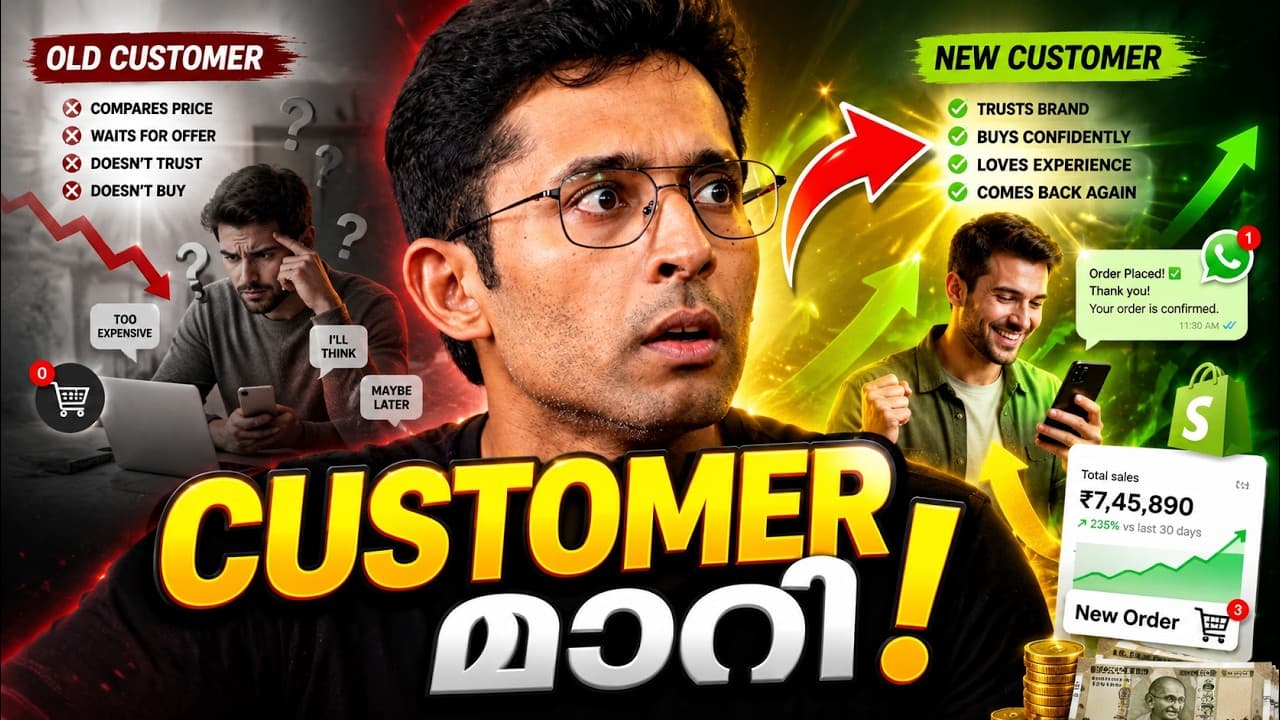
The conversation is in Malayalam. This page is an English summary of it. Watch on YouTube
About this episode
Fawas, the 23-year-old founder of BuyBox, shares his journey of scaling an online power tools business on Amazon to tens of lakhs in monthly revenue. After early experiences organising school video game tournaments and working at an offline machinery shop in Kerala, he sourced products from markets in Coimbatore and set up operations from a small room in Chennai. He recounts his initial hurdles with packaging, platform referral charges, cash flow constraints, and customer returns. Through systematic supplier partnerships and catalogue mapping, BuyBox grew rapidly, generating significant turnover with brands such as Ingco. Facing supplier disruption and margin squeezes from larger aggregators, Fawas pivoted towards launching a direct-to-consumer Shopify store, adopting Fulfilment by Amazon (FBA) models like Amazon Inbound Defect (IXD) cross-docking, and leveraging AI tools including Claude and Helium 10 for listing optimisation. The conversation provides practical insights into product research, maintaining minimum profit margins, and balancing marketplace selling with independent ecommerce brand development.
Key takeaways
- Account for all marketplace platform charges, referral fees, and return shipping costs before pricing products to avoid selling at an unforeseen net loss.
- Sourcing high-demand industrial tools directly from regional importers on credit terms allows an ecommerce business to scale inventory without large upfront capital.
- Over-reliance on third-party marketplace listings leaves a business vulnerable to sudden catalogue suspensions and aggressive price undercutting by larger aggregators.
- Setting up an independent ecommerce storefront on platforms like Shopify gives sellers customer data ownership and brand equity that online marketplaces do not provide.
- Utilising specialised logistics programmes like Amazon inbound cross-docking helps distribute inventory across national fulfilment centres while lowering operational workload.
- Enforcing a strict minimum net profit margin of at least twenty per cent ensures a buffer against returns and unexpected operational overheads in physical goods ecommerce.
Chapters
- 00:00Introduction
- 02:20Starting online power tools business at age 23
- 05:01First event attendance and entry into e-commerce community
- 09:43Early business via PUBG tournaments in school
- 14:20Launching business, buying products from Coimbatore
- 17:46Amazon seller account setup and initial sales
- 26:39First large order fulfillment and team building
- 34:01Team Work
- 40:12Marketing & Advertising,
- 43:50Website creation
- 53:25Next Step
- 57:28AI tools and operational management
- 59:29Product research and Conclusion
- Amazon Selling
- Power Tools Ecommerce
- Marketplace to D2C
- Product Sourcing
- Ecommerce Logistics