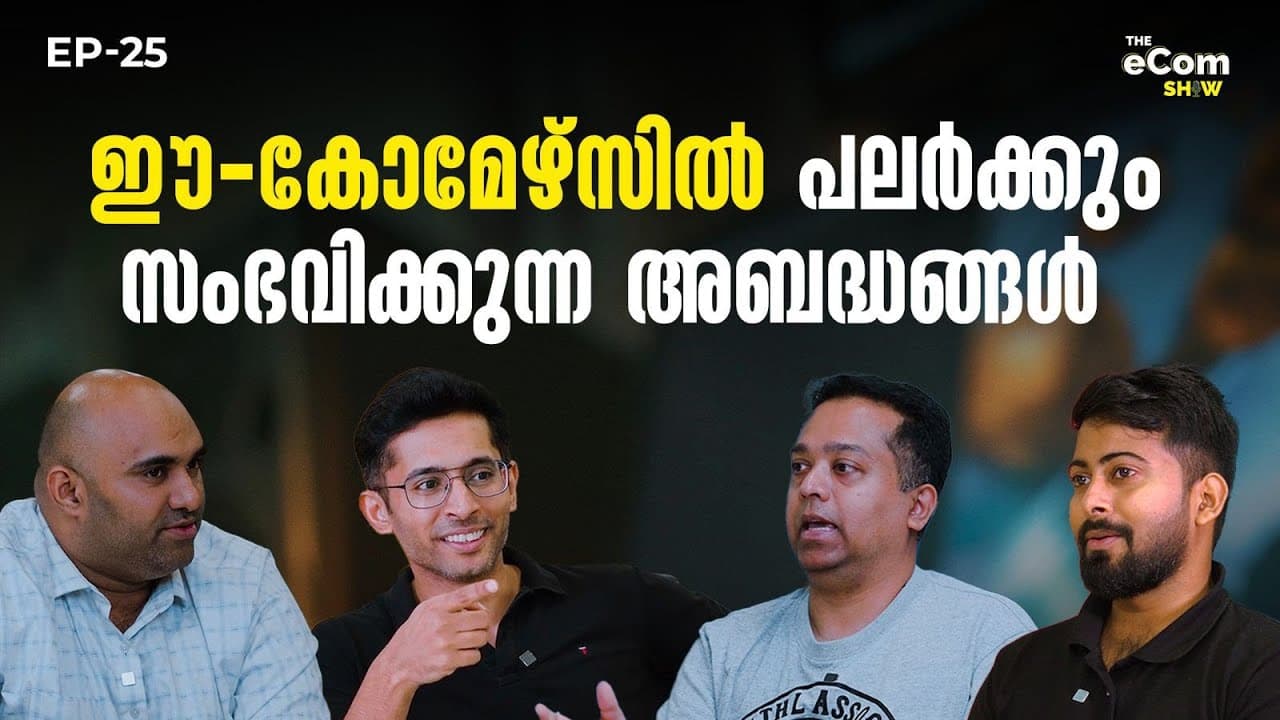
The conversation is in Malayalam. This page is an English summary of it. Watch on YouTube
About this episode
In this episode of The eCom Show, host Shan A Salam interviews Yogi, Head of Influencer Marketing at Haris & Co. Yogi shares his career trajectory, starting from technical mould making and fixture design in Bengaluru to discovering community building and launching content initiatives. He discusses his experience co-founding Fabsquad, partnering directly with Meta during the rollout of Instagram Reels in South India, and executing large campaigns producing thousands of short-form videos. The conversation explores practical strategies for ecommerce brands entering influencer marketing, including categorising creators into nano, micro, and macro tiers, setting performance benchmarks, and securing commercial usage rights for influencer-generated content. Yogi explains the commercial differences between regional Malayalam creators and creators in metro hubs such as Bengaluru, detailing pricing structures, contract essentials, and performance-based hybrid payment models. Finally, he outlines the role of dedicated marketing agencies in managing creator talent, maintaining organic authenticity, and building proprietary communities using WhatsApp to scale brand campaigns smoothly.
Key takeaways
- Brands should purchase commercial advertising rights alongside standard sponsorship fees to run paid performance ads with influencer-generated content.
- Structuring agreements that combine a baseline fixed payment with performance-linked revenue incentives encourages content creators to produce higher-effort promotions.
- For regional product launches, activating localised nano- and micro-influencers with engaged community ties often yields better returns than booking celebrity endorsements.
- Subtle brand placements that align seamlessly with an influencer's usual storytelling resonate better with audiences than direct, overt product endorsements.
- Managing multiple content creators directly creates operational strain, making specialised influencer agencies valuable for contracts, briefs, and production oversight.
- Influencers must prioritise their community trust and audience relevance over quick commercial gains to ensure long-term career sustainability.
Chapters
- 00:00Introduction
- 09:48Movie Promotion
- 12:52Working in Bengaluru
- 14:07Joining Fabsquad
- 15:08Fabsquad’s Collaboration with Meta
- 17:165,000 Reels Generated
- 18:36Entry into Haris & Co
- 19:30Yogi Meets Haris at the Stories of Revolutionary Program
- 25:45Approaching Influencer Marketing as a Brand
- 27:22Influencer-Generated Content (IGC)
- 28:25Agreements Between Influencers and Brands
- 30:31Influencers and Brands
- 37:15Layers of Influencers
- 38:33Brand Budgets for Influencers
- 43:18Measuring Impact
- 45:52Exclusivity with Big Brands
- 47:52Audience of Influencers
- 50:02Emerging Platforms for Influencers
- 51:19Yogi’s Recent Experiences
- 56:56Working with Content Creators
- 59:20Influencer Payments
- 01:01:24Quantity vs. Quality
- 01:02:44Agencies and Influencers
- 01:07:03Building an Influencer Community
- 01:09:32Influencer Marketing FAQs
- 01:18:48Conclusion
- Influencer Marketing
- Content Creation
- Instagram Reels
- Digital Advertising
- Brand Strategy